

Whose answer is your prescriber getting?
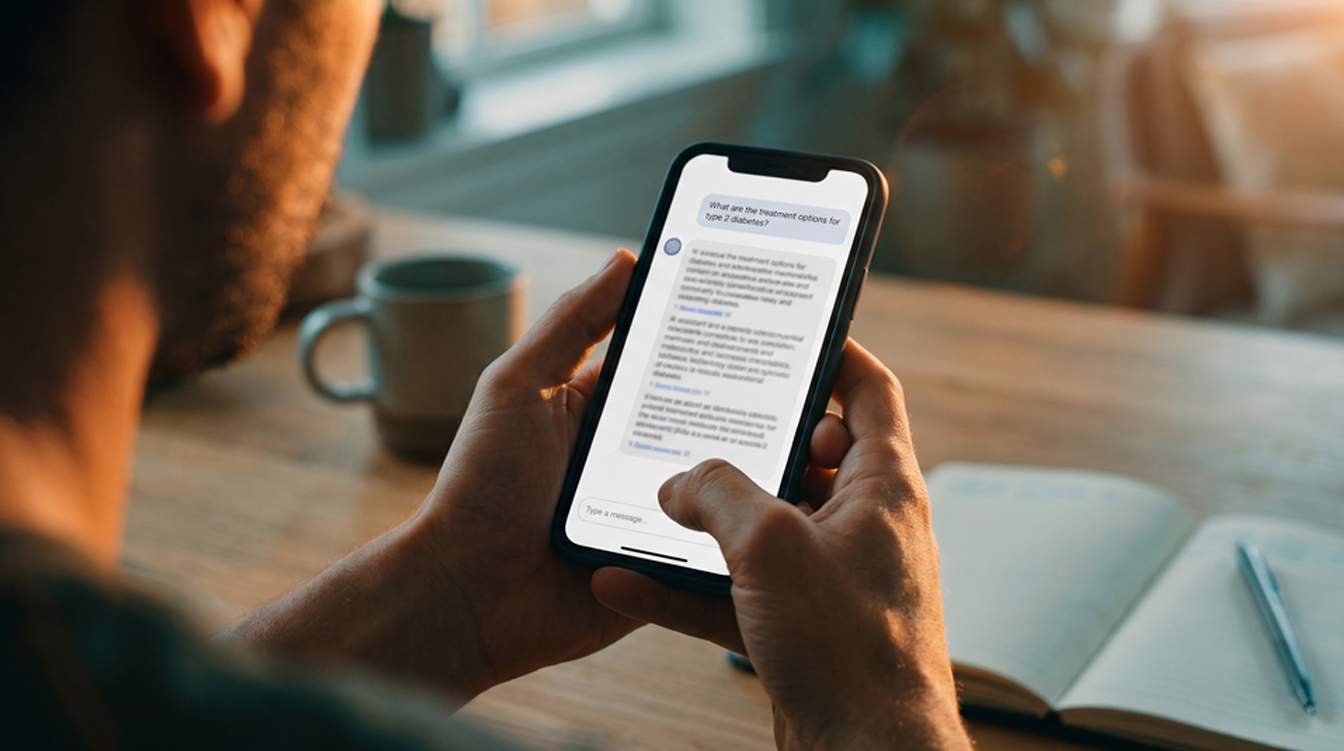
We spend a lot of our time at Buzz Radar watching what HCPs and patients are actually doing and saying online. The important question is no longer whether clinicians use AI; we know many, many of them are. A far more interesting question is: whose answer are they getting when they do?
The numbers behind that question have moved fast. In January 2025, a stratified survey of just over a thousand UK GPs found that 25 percent were using generative AI tools in clinical practice. Of those, 24 percent reported using them to weigh up treatment options and 27 percent to suggest a differential diagnosis. By the end of 2025, the Nuffield Trust and Royal College of General Practitioners reported that 28 percent of GPs were using AI tools in their work, based on a survey of more than 2,100 family doctors.
The story is similar across the Atlantic. The American Medical Association reported that 66 percent of US physicians had adopted some form of AI by 2024, up from 38 percent the year before. OpenAI says more than 40 million people now use ChatGPT for healthcare questions, and that roughly one in four of its weekly users sends a health-related prompt. Google, of course, now defaults an AI response to any query unless the user opts out.
So whose answer are they getting? SE Ranking analysed 50,807 German-language health queries on Google and found that AI Overviews appeared on 82 percent of them. Only 34 percent of the sources Google cited were classed as reliable medical references. Academic journals and government health institutions accounted for around one percent between them. YouTube was the single most-cited domain, ahead of every hospital system and medical body in the dataset. A separate analysis by BrightEdge looked at how ChatGPT and Google AI Overviews handle healthcare citations and found the two platforms disagree sharply on what counts as authoritative. ChatGPT pulls 27 percent of its citations from government sources. Google AI Overviews pull 33 percent from elite hospital systems and only 10 percent from government. Same question. Same therapy area. Different answer, depending on which machine the user asks.
For pharma marketers, this is a new kind of audience problem. The old funnel was built on the idea that the audience was human and the channels were finite. Both assumptions are gone. The new audience is a model, and the channels are now the sources the model trusts enough to quote. The brand that gets recommended is not the brand that bought the most reach. It is the brand the model decided to surface.
Most pharma teams we speak to can describe their share of voice across paid, owned and earned channels in considerable detail. Very few can describe what an AI Overview actually says about their therapy area, or which sources the model is drawing on. Fewer still can describe what ChatGPT tells a patient asking about their condition, or what a GP gets back when they query a differential.
The question isn’t how you rank. It’s whether you exist in the answer at all. SEO assumed you wanted to be on a list of links a person would scan, but the new search engine surface is a single synthesised answer. The question is whether your trial data is in it, or whether your competitor’s data is. Or whether neither of you is in there at all, and the model has built its answer from a 2019 YouTube explainer and a patient forum thread.
There is a second problem layered on top. The model’s answer is not stable. The same query, asked the same way, on the same platform, can produce different citations from one week to the next. BrightEdge notes that video citations in Google AI Overviews can swing more than fifty percentage points week on week. So the question is not only what is being said, but how often it changes and what is triggering the changes.
Recommendation systems are now shaping brand visibility before a clinician ever makes a decision, and almost nobody in pharma is watching them. This is the layer BRIANN sits in. It surfaces which sources dominate AI answers in a given therapy area, and tracks how those citations shift over time. It also connects the citation pattern to what HCP and patient communities are actually saying, so a sudden change in what the model is citing can be read against the conversation that may be driving it.
A few honest questions for any commercial team reading this. When was the last time anyone in your organisation saw what Google’s AI Overview returns for your product? Could you say which sources are being cited, or how the answer differs between Google and ChatGPT? If a GP queried a model about your therapy area this morning, would you have a way of knowing what came back?
The campaign era let you buy the audience’s attention. The recommendation era lets a model decide what it tells them. The first question for any pharma marketer in 2026 is whether they know what the machine is saying when they’re not in the room.
Marc Burrows Published on November 3, 2026 12:20 pm
Frequently Asked QuestionsFAQs
What percentage of GPs are using AI tools in clinical practice?
As of the end of 2025, 28 percent of GPs reported using AI tools.
How does ChatGPT's citation sourcing differ from Google AI Overviews?
ChatGPT pulls 27 percent of its citations from government sources, while Google AI Overviews pull 33 percent from elite hospital systems.
What is the significance of AI Overviews in healthcare marketing?
AI Overviews shape brand visibility and influence clinician decisions by determining which sources are cited.