

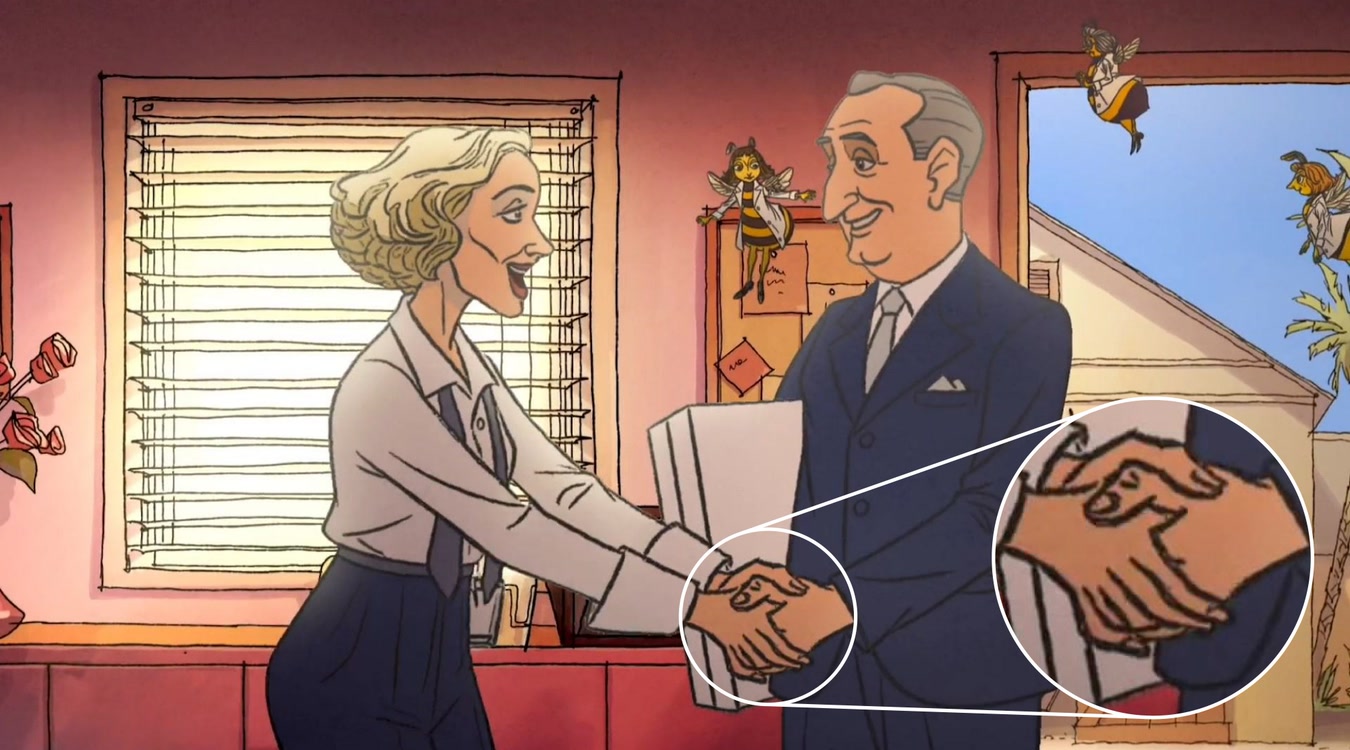
In the last fortnight two of the biggest fashion houses in the world released Christmas films and went out of their way to make the same promise about them: that they had been drawn by hand.
One was applauded for its beautiful artistry, while the other was torn to shreds after screenshots of a cartoon Marlene Dietrich with one finger too many went viral. We spend a lot of our time watching how audiences react to brands, and it’s rare to see two campaigns this similar land this differently, this close together.
Two films, one promise
In late October the legendary fashion house Prada released Drawing Prada, a charming ad campaign led by the veteran Disney animator John Pomeroy, blending human actors (including Sadie Sink, Maya Hawke and Kelvin Harrison Jr.) with hand-drawn animation, in the style of Disney classics like Mary Poppins and Bedknobs and Broomsticks. Its’ cute foxes playing in the snow, snaggle-toothed cats and shoe-carrying mice were painstakingly drawn by hand using traditional animation techniques. As has become common with these things, Prada released behind-the-scenes footage of the process alongside the films (Apple did the same with its practical-effects Apple TV intro last year) and people loved it. One commenter quoted by NBC News put it bluntly: “AI = Broke, cheap, lazy”.
Rivals Dior followed on 4 November with Christian Dior’s Night in Color, a seven-minute short directed by Sylvain Chomet, the animator behind the Academy Award-nominated 2003 film The Triplets of Belleville, featuring the voices of Robert Pattinson, Josh O’Connor and Rihanna. In the launch statement Jonathan Anderson, Dior’s creative director, said the film, galloping animated chairs and all, was “all hand-drawn using techniques that go back to the 1940s”, the same promise Prada had made.
Frame by frame
The internet, though, loves a sleuthing project. Within a few days animators were pausing the film and posting stills. Some of the most widely shared came from the Instagram account mad.animator, pointing to tangled limbs, wonky perspective and a Dietrich with six fingers on one hand. The French animation site Catsuka contacted the studio, got no reply and said AI use “now seems obvious”.
On 7 November Chomet and his producer Aton Soumache gave an interview to Variety. The film took seven months and was drawn by artists, they said, but “automated interpolation”, where software generates the frames between key drawings, was used for “a very small part of the process”. Chomet described it as “a way of automating the repetitive, mechanical part of animation, not the creative work.”
In fairness to him, that’s not an entirely unreasonable thing to say. In-betweening is the repetitive end of 2D animation, and the film may well be almost entirely drawn by hand. The trouble is that Dior had said “all hand-drawn”, and the part about software only came out after viewers had spotted it. Had they not staked the value of the piece on its human creativity there’d be less of an issue here. Unfortunately, having waved such a proud flag for hand-drawn animation, Dior was always going to be undermined by AI techniques it hadn’t mentioned.
What the rules say
The UK’s Committee of Advertising Practice says there is no blanket legal requirement to disclose the use of AI in ads, and suggests advertisers ask whether the audience is likely to be misled if they don’t. In the EU, the AI Act’s labelling duty for AI-generated content doesn’t apply where the system performs an assistive function for standard editing. Software filling in frames between human drawings may not need flagging under either.
But regulators weren’t the ones pausing the film. Dior had made the artistry itself the reason to watch, so anyone who took the claim at face value was always going to care about the frames where that artistry was absent.
What the audience had been saying
The presence of obvious AI-generated work in creative projects is increasingly causing reputational problems in marketing. This year has seen a massive spike in mentions of “AI slop”. In the UK, 82% of consumers said they would rather see adverts made by people even if AI could improve them, and 86% believe it will one day be impossible to tell whether an advert was made with AI unless the brand discloses it. A YouGov poll in July found 94% of Britons think companies should disclose when they use AI-generated actors in ads.
Closer to home for Dior, Prada had spent the week before its launch showing people what a hand-drawn campaign looks like and how one gets made. The people best placed to check Dior’s claim had just been handed something to compare it with, and some said as much in the comments: “After the Prada commercial, its so easy to see its AI.” Anyone at Dior keeping an eye on that conversation would have known the film was going to be checked by working animators with Prada’s film open in the next tab.
What Dior could have done
If Dior’s launch notes had said the film was drawn by around twenty artists over seven months, with software filling in some of the in-between frames, we suspect most people would have shrugged. Said upfront, it would have come across as a bit of extra detail about how the thing was made. Dragged out after a week of screenshots, it looked like a confession. Especially as the answer came through a trade interview while the people asking were in the comments and on Instagram.
This is why we think honesty about AI is also a listening job. A brand can only make a claim like “all hand-drawn” safely if it knows what its audience is going to check, and the only way to know that is to pay attention to them.
Prada showed people how its film was made and invited its audience to look closely. And they did. Unfortunately they also looked closely at Dior, a company that had made a lovely film, presumably at no small expense, for the same audience, told them it was all done by hand, and forgot that someone would be likely to press pause.
Incidentally, this article, like many of our blogs, was conceived by our team, drafted with AI assistance and then edited and rewritten (quite a lot, actually) by a human writer. You’re welcome to pause it frame by frame and see if you can spot the joins. The important thing is that we’re not claiming otherwise.
Marc Burrows Published on November 11, 2026 4:11 pm
Frequently Asked QuestionsFAQs
What are the main differences between Prada and Dior's Christmas films?
Prada's film was praised for its artistry, while Dior's faced criticism for potential AI involvement.
How did audiences react to the use of AI in Dior's animation?
Many viewers expressed disappointment, feeling misled by Dior's claim of 'all hand-drawn' animation.
What does the UK Committee of Advertising Practice say about disclosing AI use in ads?
There is no blanket legal requirement, but advertisers should consider if audiences might be misled.