How people talk about mental health online, and how pharma can listen safely
World Mental Health Day was on Saturday 10 October. The theme this year, set by the World Federation for Mental Health, was all about listening: "Lived Experiences Heard: Real Voices, Real Change".
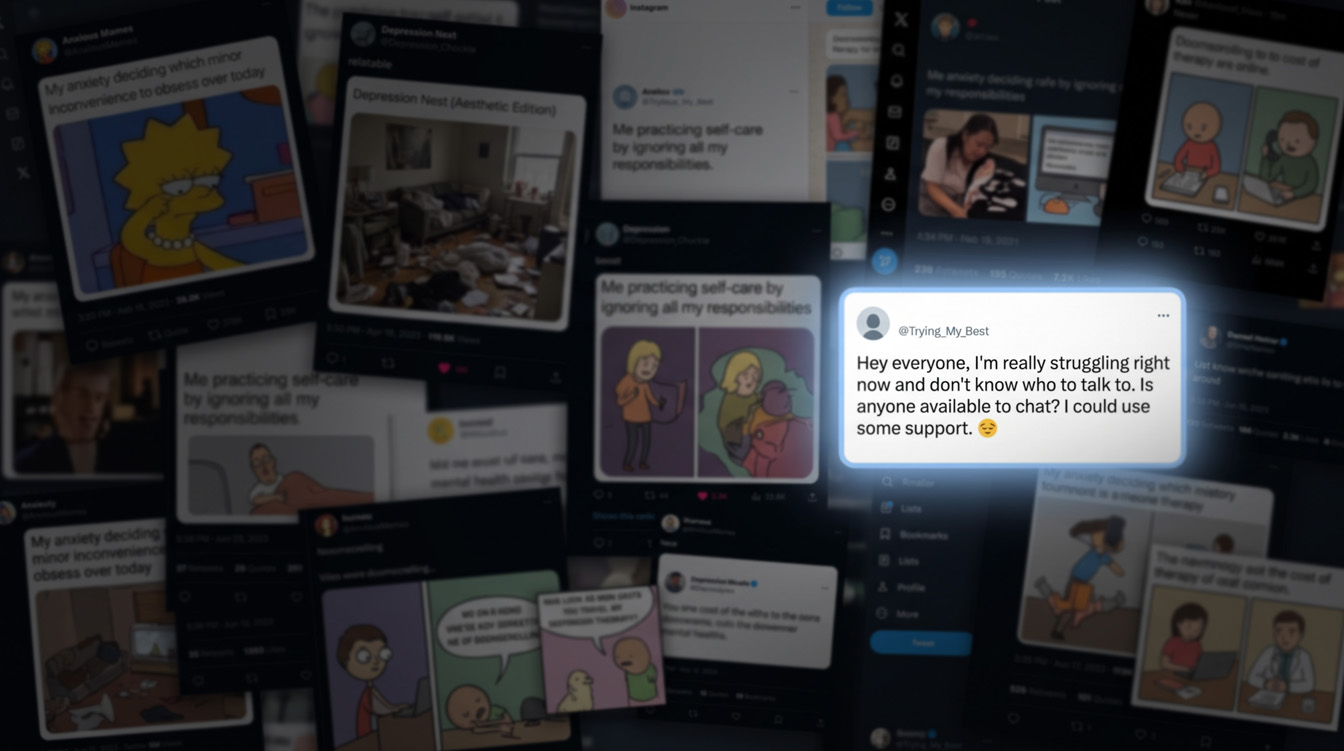
If you are brave enough to search social media for "mental health" most of what comes back is not people talking about their own mental health. It’s mostly memes, news, and insults. The people describing what they are going through are in there too, you just have to get past a lot of noise.
We used BRIANN, our audience intelligence, to read the public English-language conversation about mental health in the UK and US from 20 June to 2 October 2026. That conversation runs to millions of posts across TikTok, X, Facebook, YouTube and other public sites.
Memes and relatable content
A big part of the conversation is people recognising themselves in a joke. ADHD is the clearest example. Of the posts about the six conditions and subjects we tracked most closely, 17% were about ADHD, and those posts lean positive. People compare notes, laugh at the same daily struggles and share videos that feel familiar.
It makes people feel less alone, and it travels. A funny post about living with ADHD gets shared far more widely than a careful explainer from a clinician.
But it is hard to read as data. A meme shared by thousands of people shows a feeling is common, without saying what any one of them needs or what is getting in their way.
News stories
News stories have a habit of pulling the whole online conversation towards them. This summer a high-profile US court case involving postpartum psychosis did exactly that. Posts about postpartum mental health rose about six times from July to August. About half of them were about the case, and almost 9 in 10 of those were negative. Many treated postpartum depression and postpartum psychosis as the same thing, or dismissed both as an excuse.
Underneath, a smaller conversation carried on: parents talking about their own experience and recovery, and charities explaining the warning signs and where to get help. If you only looked at the volume, you would miss it.
Mental health words used as insults
The third kind of noise is the language itself. "Get therapy" is a common put down. "PTSD" gets used about a football result or a bad meeting. "Mental illness" and "psychosis" turn up as insults in political arguments that have nothing to do with health.
This changes the numbers. Across the whole conversation, 52% of posts were negative. A simple count would say people feel bad about mental health support, but read the posts and a good share of that negativity is people describing distress, or using the words to attack someone.
What lived experience sounds like underneath
Past the noise, people rarely say they don't want help. They describe trouble getting it, or keeping it.
Cost comes up again and again: when someone pays for a session and leaves feeling unheard, they are less likely to try again.
Poor continuity also comes up repeatedly: cancelled appointments with no follow-up, counsellors who seem to forget the case from week to week, having to retell a painful history to every new person.
Some people say they were treated as not unwell enough until they were in real danger. Others were turned away because their needs were too complex. Some worry that telling anyone could be used against them, at work or in a custody dispute. And some have nobody around them, with families who dismiss a request for help as attention seeking.
The way they talk is different from the way professionals talk, too. Patients describe what it feels like: the body, broken routines, wanting to be believed. Healthcare professionals describe how it can be understood and managed. Both matter, but they need to be heard separately.
How BRIANN cuts through the noise
BRIANN is built to get from millions of posts to what patients and healthcare professionals are saying.
It separates patient and HCP conversation, so a team can read each on its own terms instead of one mixed count.
Every answer links back to the posts it came from. If a theme looks big, you can check whether it is patients describing their experience or a meme doing the rounds.
It says when the data isn't there. When we asked BRIANN about a period before this topic started collecting, it told us it had no posts to answer from rather than guessing.
And every BRIANN account has a dedicated human pharma specialist who checks the work. Telling a joke from a cry for help still needs a person.
Listening safely
People share very personal things about their mental health online, and pharma has to treat that with care.
BRIANN can strip personal data out at source, before anyone sees it. This is an option set for each topic. For a subject like mental health it is the right place to start.
Some posts will mention side effects that a pharma company may have to report, so agree a process with your safety team before the listening starts.
Done carefully, listening shows a team what people are struggling with, in their own words. In our experience surveys and focus groups find that hard to reach.
This year's World Mental Health Day asks for lived experience to be heard. For a pharma team, that starts with finding it under the noise and handling it with care.
How we did this
We used BRIANN to analyse public, English-language social posts from the UK and US between 20 June and 2 October 2026. The topic collects a sample of the full conversation, so we report shares and percentages rather than totals. Condition figures come from the six terms we tracked most closely; one post can mention more than one. We have not quoted any individual and have left out names and accounts.
Lynsey Gray Published on October 6, 2026 10:04 am
Frequently Asked QuestionsFAQs
What is the main theme of World Mental Health Day 2026?
The theme is 'Lived Experiences Heard: Real Voices, Real Change'.
How does BRIANN help in analyzing mental health conversations?
BRIANN separates patient and healthcare professional conversations to provide clearer insights.
What are some common misconceptions about mental health discussions online?
Many posts use mental health terms as insults, which skews the perception of overall sentiment.