

Buck the sheep and the takedowns that brought her back
We spend a lot of our working lives telling brands that the conversation about them is already happening, and that they need to know what it says before they act on it. We have rarely had a case study this vivid, and never one involving a sexually desirable sheep.
A sheep gets a haircut
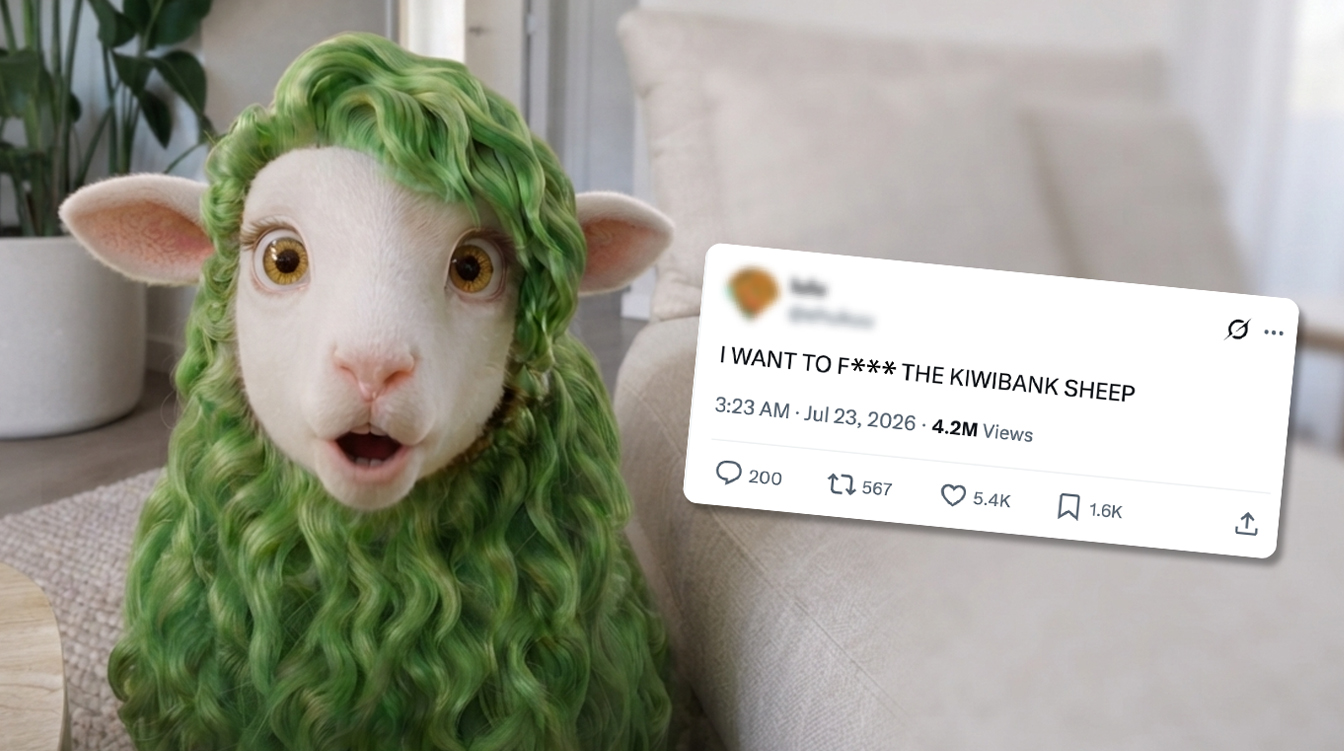
In July, Kiwibank, New Zealand’s state-owned bank, launched “Bank Kiwi”, a brand platform fronted by Buck, a CGI sheep with green wool who refuses to follow the flock. Her launch video showed her riding the bus, drinking a flat white and getting her fringe trimmed. The internet looked at the haircut and drew its own conclusions.
On 24 July an account on X announced in capitals that it, and we can only apologise for this, wanted to “f*** the Kiwibank sheep”. The post amassed 4.2 million views and more than 5,000 likes. A quote tweet pointing out that this was undoing years of good work convincing the world that the old stereotype about New Zealander’s fondness for their sheep wasn’t true was liked 93,000 times. Bluesky’s furry artists then produced Buck images of their own. Inevitably, some of them got quite spicy.
After that, things settled down and the storm passed. Buck’s brief sexualisation would have been a quick, cheap internet distraction and nothing more. Mentions, shares and content slowed to almost nothing. Most of the coverage didn’t dwell on this slow down in activity. It’s the aspect we’d have been watching most closely though, because it suggested that the moment was surely passing.
Why did the Buck memes come back?
From 16 September, the New Zealand law firm MinterEllisonRuddWatts sent copyright takedown notices to X and Bluesky on Kiwibank’s behalf. One notice seen by The Spinoff accused 10 accounts of making “highly sexualised and inappropriate copies” of Buck. Several had done nothing of the sort. One had posted an image from Kiwibank’s own advertising with a joke attached, and Bluesky artists said drawings of sheep with no connection to Buck came down too.
Suddenly the Buck conversation was back, with a new narrative. The original blip had been silly and quickly forgotten. This time it came with a side order of anger. Hundreds of accounts posted more Buck content in protest. New Zealand’s Free Speech Union wrote an open letter telling the bank it could enforce its copyright but not use it as a content filter. John Oliver gave the saga a segment on Last Week Tonight and called the crackdown completely counterproductive. A joke that had nearly run its course was international news.
What the conversation was saying in August
A conversation like this leaves a record of its volume, its tone and who is driving it. Anyone tracking Buck through August would have seen a spike in late July and a long tail-off after it, which is a conversation dying of natural causes. The least risky thing a brand can do with one of those is leave it alone.
Earlier this month we set out four stages that most brand rows pass through. People argue about what a post means, then ask who signed it off, then the row spreads beyond the first post, and finally they stop arguing and act. Buck had stalled at the first stage. The takedowns pushed her through the other three in a matter of days: the Free Speech Union asked whether anyone at the bank had considered fair use before the notices went out, the row spread to Bluesky artists who had never drawn Buck and to jokes about other banks’ mascots, and hundreds of people moved from making jokes to posting in protest.
Listening would also have shown that the people posting about Buck were several different groups. There were joke accounts using the bank’s own images, a small community of artists producing explicit material and, somewhere in the middle, Kiwibank’s actual customers. Each called for a different response, or none at all. A blanket legal notice treated them identically, turned the jokers into activists and handed the activists a cause.
Nobody outside the bank knows whether any of this moved customer sentiment, and it’s not obvious anyone inside it checked before calling the lawyers. Separating the audiences within a conversation and showing whether it is growing or fading is the job we built BRIANN to do in pharma, where a misjudged response carries regulatory consequences as well as embarrassing ones.
Buck answers for herself
After weeks of near silence, Buck returned on 13 October in an Instagram video. In character, she explains that things have been made about her and put online, and that if you saw what she’s seen you’d be shocked. She is only an animated sheep, she says, but this happens to a lot of people, maybe someone you know. Then she heads off to touch grass.
The bank had a serious point all along: sexualised images made without someone’s consent do real harm, and they happen to real people far more often than to cartoon sheep. Made through lawyers in the language of copyright, that point invited a reply in the language of censorship. Made by Buck, with a joke either side of it, it reached people in the register they were already using. It was a smart move, and Kiwibank deserves credit for it.
The most popular comments we can see ask when the plush toy is coming and declare that, now the bank has addressed it, it’s officially funny. Whether many viewers took the serious point away is harder to tell from a comment section, but after six weeks of being laughed at, the bank finally had its audience laughing with it.
Two answers to the same conversation
Kiwibank’s legal response brought a fading joke back to an international audience, along with an open letter and a late-night punchline. Its sheep produced merchandise requests. The most recent response worked because it was pitched at the audience that actually existed. Had the bank been measuring the conversation in August, it could have skipped straight to the video, or done nothing and let Buck get on with her life.
She is, after all, a sheep who refuses to follow the flock. It’s a shame her bank’s lawyers didn’t take the hint.
Marc Burrows Published on October 20, 2026 8:51 am
Frequently Asked QuestionsFAQs
What triggered the viral response to Buck the Sheep?
The viral response was triggered by a humorous post about Buck that garnered millions of views.
How did Kiwibank respond to the memes involving Buck?
Kiwibank sent copyright takedown notices to platforms like X and Bluesky, which reignited the conversation.
What was the public's reaction to Kiwibank's legal actions?
The public reacted with protests and humor, leading to increased engagement and conversation around Buck.