


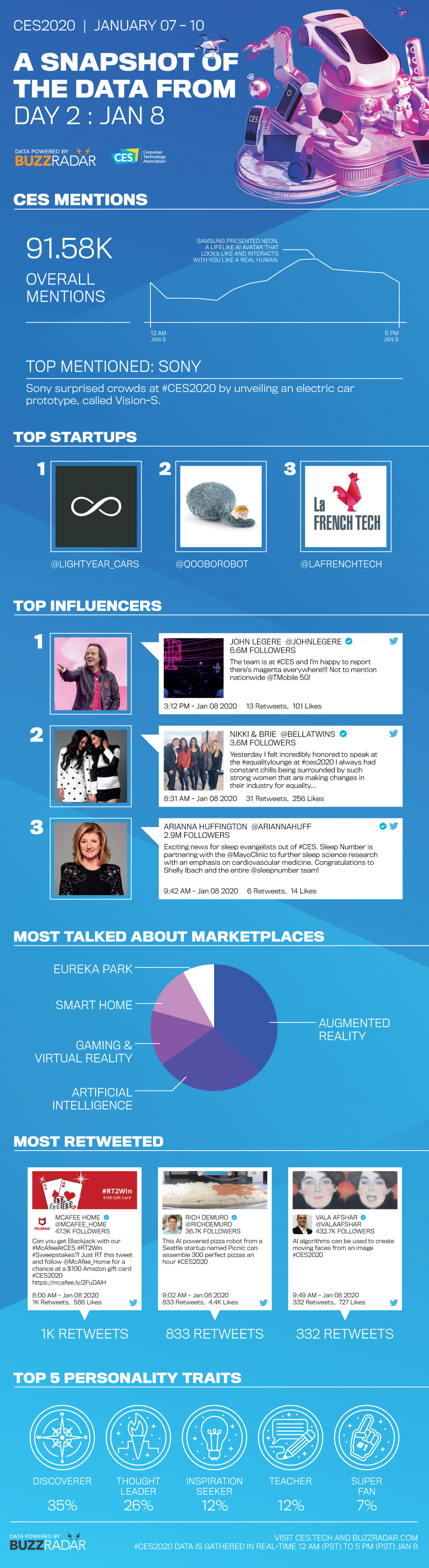
CES 2020 is fully underway! On the second day of CES, conversation stayed steady. Today was all about Augmented Reality, largely due to MasterCard’s new AR app.
AI was a second fan favorite, propelled by Samsung’s launch of NEON. NEON is an incredibly realistic AI Avator that looks and interacts like a real human.
Conversation also kept on the hype of Hyundai and Uber’s Flying Taxi announcement. Though we’ll need to wait until 2023 to see that one on the CES showfloor.
The day was full of excitement, healthy intrigue, and practical use of technology in our lives. Check out all the highlights from the second day below, and sign up for a full review of the trends here.
To follow our CES 2020 coverage live, head over to twitter.com/buzzradar. Or if beautiful insights, like the ones below, are your thing, come back to our blog for our daily roundups. And of course, don’t forget to take our CES Audience Analyzer for a spin by sending a DM to @CES with the word report!
Enjoy the show!
Nicky Yates Published on January 9, 2020 9:00 am
Frequently Asked QuestionsFAQs
What was Samsung NEON announced at CES 2020?
Samsung NEON is an incredibly realistic AI avatar that looks and interacts like a real human. It was one of the major AI innovations showcased at CES 2020 that generated significant conversation among attendees.
What is MasterCard's AR app from CES 2020?
MasterCard launched a new augmented reality app at CES 2020 that was a major highlight of the show's second day. The AR app was one of the key drivers behind augmented reality being a top conversation topic at the event.
When will Uber flying taxis be available after CES 2020 announcement?
According to the announcement made by Hyundai and Uber at CES 2020, flying taxis won't be available until 2023. The partnership generated significant buzz at the show despite the wait time for actual implementation.
What were the main technology trends at CES 2020?
The main technology trends at CES 2020 included augmented reality applications, AI innovations like realistic avatars, and future transportation concepts. These technologies focused on practical applications that could integrate into everyday life rather than just experimental concepts.